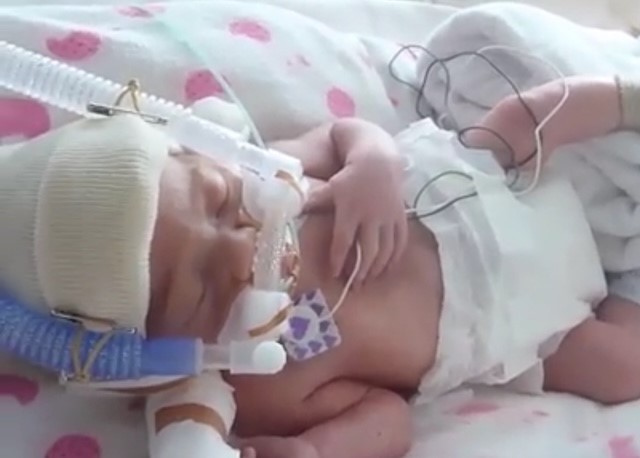
At 28 and a half weeks, my daughter was born prematurely. I vividly recall that night: my wife underwent an emergency caesarean section due to a caecal volvulus. After she collapsed earlier, I rushed her to the maternity unit, where her pain and anxiety were made worse by the inability to find a pulse for our unborn daughter.
As my wife was wheeled off to theatre, I developed a profound sense of isolation and loneliness. That feeling was interrupted only five and a half hours later, when someone arrived and escorted me two floors up to the neonatal intensive care unit (NICU).
I remember entering the room and thinking how noisy it was: the gadgets and devices used to keep babies alive—wires, tubes and machines everywhere. I was led to a space nearest the window overlooking Auckland at night. As I looked down, I caught my first glimpse of my little girl: the tiniest, but completely formed, beautiful little thing—dwarfed by her surroundings as she lay in her incubator, attached to life-support equipment, a CPAP tube, and a nasal feeding tube.
The room was filled with unfamiliar sounds, not only from my daughter’s equipment but also from her three other roommates. Each of those babies was even more premature and frail. One of them had been born at 24 weeks—an astonishing 16 weeks early—and was therefore pushing the limits of medical science in her fight for life. Fortunately, all of them survived, albeit some with the prospect of lifelong disabilities as a result of their prematurity.
My daughter was unwell, but she was alive. Around midnight I was told that my wife was coming out of surgery. Even then, it would be another two days before she could see her daughter—and that delay was not without its bonding challenges. In total, we stayed in NICU for 60 days.
I recount this because I want to address the recent removal of legal protection for unborn children by the House of Commons. While the regulated abortion limit remains at 24 weeks, the amendment eliminates any possibility of holding a mother criminally accountable for the death of an unborn child at any point in her pregnancy.
My daughter was born at 28 and a half weeks: perfectly formed, but undersized—1.15 kilograms and 34cm long. I already find it hard to reconcile the fact that an unborn child at 24 weeks—around 30cm long and weighing roughly 600g, with full facial features and fingers and toes—can still be terminated legally. However, I find it unconscionable that, if my wife had deliberately ended our child’s life—or acted with reckless disregard for her safety—from that point onwards she would no longer face prosecution for killing an unborn child.
This is not a pro-life stance per se. I am broadly comfortable with women’s access to abortion, although I consider the 24-week limit excessive. But this is not a right-to-life debate, so let’s set that aside.
My concern is narrower and, to me, obvious: women who engage in plainly harmful behaviour during pregnancy, resulting in the death of a foetus, should face some form of legal accountability. I do not know whether a partner or family member would still be able to bring a civil claim against the mother. That is unclear to me, though I presume the avenue remains open—even if fraught in practice.
There must surely be a clear moral obligation on a mother—a duty of care—to an unborn child, just as there is to any dependent child or adult. Why should that duty of care differ between a pre-born child and a born child?
And what of cultural abortions—termination undertaken for reasons that society would plainly condemn? In such a scenario, I understand the mother would not be prosecuted, but the father might be. If that is so, it creates a glaring double standard. It leaves a significant gap in fairness and justice, and it effectively grants women an absolute right to end a pregnancy at any stage, for any reason, without criminal consequence.
In an attempt to decriminalise the actions of pregnant women suffering from mental illness, it appears we may have opened a chasm of potential abuse—and unintended consequences—for unborn children.
I sincerely hope Parliament reconsiders this properly. It was not given anything like the time required for due consideration and scrutiny of all arguments. Perhaps their Lordships will take longer to review this iniquitous amendment, though I am not holding my breath. I understand the motives behind it; I simply do not think the outcome is right.


 On The Page
Leave a comment